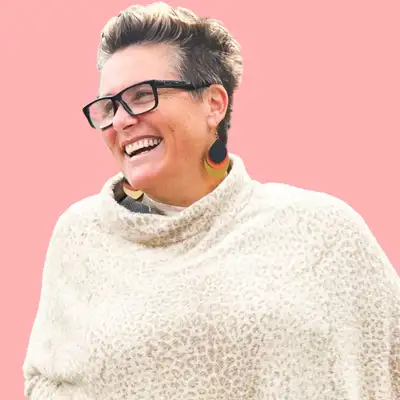
Narrative Medicine with Kayla Branstetter
Kayla Branstetter
===
[00:00:00] We know our bodies. We do. Yeah. And I've encountered it. I'm sure a lot of women have encountered it. Shortly after COVID, I was
having these symptoms. My blood work's coming
fine, coming back normal.
And then other tests were ran and they're
like there's nothing wrong with you. And I'm like, I'm telling
you that I don't feel right. Yeah. It is so dismissive, right? When they're like, my test can't show
anything, so therefore
there's nothing wrong. It's so dismissive. Yes. And narrative medicine
is bringing that
agency and that power back to the patient
of they're a participant in
let's have those
conversations of, I realize the labs say this,
but maybe we should try
something else. I think let's not be dismissive
toward a patient's experience. Yeah. Because they know their bodies.
welcome back to the
Midwifery Wisdom Podcast. I'm your host Augustine, and [00:01:00] I'm
so excited to be joined by Kayla. Kayla is an English instructor in Crowder
College, and she teaches literature,
creative, nonfiction, and composition.
She's also a TEDx speaker and educator,
and her work centers on women's health,
narrative medicine, reproductive trauma,
and the cultural expectations placed
on women's bodies and resilience. She's currently completing a
doctorate of education in healthcare
with research focused on narrative
medicine in women's healthcare.
Her forthcoming book Don't Be In
Athena, examines reproductive health
medical gaslighting on the myth of
silent endurance through storytelling,
research, and at times dark humor. Welcome, Kayla. Thank you for having me, Augustine. It's such a pleasure and
this is such a fun topic. It's heavy, right?
It is heavy. What a break. What a break from a lot of our providers and
listeners who are dealing with numbers and
facts and figures and labs and like [00:02:00] vicarious
trauma and all kinds of things, it
feels like a relief when I look at your work. I got to review your book. Thank you so much for
sharing that, and welcome.
I can just feel like the relief the magic that is narrative medicine and storytelling,
and I just would love it if you could, in your
own words, tell us what is this all about? What do you do?
I feel like I need to go back in time
because I have an interesting story. When I started college in 2006,
I was actually a pre-med major
and I enrolled in my biology class.
I absolutely hated it. Hated it and I switched my major
to English and fell in love with
English literature, with writing. And life happened. I am the daughter of a teen mom who
gave birth in the 1980s in a traditional
southwest Missouri, where that was taboo. So I saw everything that my mom had
to [00:03:00] endure, and then I went through
infertility and it felt like
the same people
who judged her were judging me.
And then miscarriage and I
had friends approach me and
were telling me their stories.
And this idea of writing this book
came about, and this is where I
believe narrative medicine found me. I wasn't searching for narrative
medicine, if that makes sense.
Yeah. Totally.
I was invited to an artful symposium at
Missouri Southern State University, and
that introduced me to narrative medicine
professionals,
and I realized what I was doing.
I've always had this
passion for storytelling. Always. When I was growing up, I frequently
escaped through
the use of journaling
a diary or even creating
my own stories.
So I understand the power of
narrative, and so I find it full circle
that I initially began
my college career
wanting to be a medical provider.
It's just, it looks different now.
Yeah. In narrative [00:04:00] medicine. Yeah. Yeah. And I'm reminded
of there are a lot of
midwives who also
grow up thinking,
oh, I wanna become a baby doctor. I wanna become,
that's what our culture has. Our culture has a container for that.
And yet once they
really follow their passion,
they discover, oh no, I wanna be a midwife.
And so I, I just feel like reminded
of that beautiful journey of the
difference between being an expert
on high compared to being someone
who holds space for transformation. And it feels like you also discovered
that in a circuitous route. In your doctorate, you are
doing research on this process.
Can you define what is narrative medicine
and what is your research all about? Narrative medicine, in all honesty, it
probably has been around for centuries. We're just now putting a label to it. And it was established, one of
the founding members [00:05:00] was Rita
Charon, and she's a professor at
Columbia University in New York City.
And she is an MD and she, in one
of her books, she talks about watching
this play Wit, and it's about an English
professor undergoing cervical cancer. And just this cold, this coldness between
being diagnosed with cancer and the
physicians, and not just the physicians,
like every medical professional she
encounters, while this horrible news has
been delivered to her, and it's also the radio
or radiology tech of just asking her name.
And not having any communication
outside of like date of birth. What's your name? Okay. I'm moving you to this next room. And Rita talks about how as a
physician it, like at first she was
offended by this is how
this writer was
depicting the medical community.
And then she takes
a step back [00:06:00] and it. It really challenged her on how
maybe some patients were
seeing the medical community.
So narrative medicine,
I actually have my
literature review out
here in front of me. I was trying to be as
prepared as possible. Awesome. So narrative medicine
is defined as
a focus on the patient's needs
and
the empowerment of their active
participation in the
healthcare process. So we're seeing
patients as a participant
when in their healthcare
they're not,
it's not this
transactional relationship.
They have a say in their
medical chart, tells a story.
And in interviewing women for my
book, I don't know how many times
I encountered women
who initially had no
idea what was going on
with their bodies. They knew they
couldn't lose weight. They. They felt like they were on emotional
rollercoaster and anytime they'd go to
the doctor in their minds, I don't wanna
generalize, I don't wanna
say it's every
physician because it is not, [00:07:00] the physicians
that they initially visited said, eat healthier
and exercise well later they,
they have PCOS.
Yeah. And so it's a lot harder to say,
just eat right and lose weight.
And so it shifts that you can look
at a patient's chart and you can
come to your own conclusion in
your assumptions about the patient. But there is a story behind
those numbers
in the patient's chart
and this is so relevant.
My gosh, there's so many cases of
obstetric violence coming to light.
We just posted yesterday, reshared
this story of, a woman who was taken
to court via zoom while in labor Yes. In the hospital for a
court ordered cesarean. This is a Yes. A viral story right now. And at the same time we just, we see
so little regard in the medical field for
the, that there being a person home. And then you apply it to [00:08:00] all
women's reproductive rights
disappearing across the country. And it feels like this is such important
work now in midwifery, this is like
a hallmark of midwifery, is that
you are serving the whole person.
That their story they're centered
in the entire experience. Informed decision making
is at the core of midwifery. So our audience will understand this
completely, but about five to 20% of
folks who choose to birth with midwives. Will need to be transferred for medical
intervention at some point during their care.
Just, that's just how the numbers fall out. And so our audience deals with like vicarious
trauma where they witness it happening
and they feel completely powerless. And I think this concept or this language
that you are reviving, even though it's like
centuries old around the campfire, we
now have language to describe what is
essential in emotional healing from trauma.
And even [00:09:00] what I think you, your work could
do, I got to read some of the stories that
you have, Penn. And it's just so illustrative of
how the medical system especially needs
to wake up and become trauma informed. There's such intersectionality in your work. How have you been able to balance
all of these different influences?
This book was the hardest book to
write, but I can imagine and you have
their traumas become my traumas. They're my stories. Yeah. Yeah. And it's so hard also fueling me because
they deserve to have their voices heard. And I do, there are some chapters that
criticize some of the medical community,
but it's also fueling me to better prepare
future healthcare professionals for the field.
Because what literature can
do for healthcare professionals
is introduce them to grief. Yeah, introduce them to death. Introduce them to different
cultures to [00:10:00] challenge their thinking. And my goal is with the narrative medicine
that I'm hoping to adopt at my institution,
is I wanna challenge my students
to be aware of maybe their internal
biases they may have over a specific
group of people or a specific gender.
And challenge that, and make it come
to surface and make them realize, okay,
are can you treat people with respect? Do you have a biases toward
a specific group of people? But not only that, I don't feel like if
it's someone is a midwife, a doctor,
or a nurse dealing with women in
their reproductive care or labor and
delivery, you're going to encounter
where a baby's gonna be born stillborn.
And how do we prepare? A healthcare professional for that moment. And then not only that, how do we
stop the burnout with physicians
and nurses and midwifery or
midwifery if we don't prepare them? [00:11:00] And so narrative medicine, as much as it is
about patients, it's also about allowing our
healthcare professionals to be reflective
when these tragic moments happen.
Yeah, it is so heavy. And obviously in researching
this and writing this, you had to
absorb a lot of pain, a lot of stories. In order to transmute it. What do you think the process is like? I wanna talk about the provider, but I
also wanna talk about the clients, the
patients, the people at the center of
these traumas or losses or processes.
And your focus has been
specifically reproductive health. Yes. And I think that's fascinating. You got that from both ends, from your
mother's experience and your experience. What do you think narrative medicine as
a practice, like learning how to voice your
story, how do you think that affects people?
I think most of us wanna feel heard. Yeah. And right now I think there's a huge [00:12:00] mistrust
between the medical community and
the public, at least in the United States. I think we're seeing Yeah, that
there is a massive disconnect. And if we think, not to sound cliche,
but if we think about HU humans
over thousands and thousands of
years, what's been the one constant?
It's the power of storytelling and community. Yeah. And our ability to feel heard. And so anytime I encountered a woman who
has this experience with one doctor such
as PCOS, and it's oh just eat right and diet
or diet and exercise and you'll be healthier. And when they finally found a
physician that was let's run some tests.
Let's see. And then PCOS comes is their diagnosis. They finally felt heard and validated
about what their body is going through. We know our bodies. We do. Yeah. And I've encountered it. I'm sure a lot of [00:13:00] women have encountered it. Shortly after COVID, I was
having these symptoms. My blood work's coming
fine, coming back normal.
And then other tests were ran and they're
like there's nothing wrong with you. And I'm like, I'm telling
you that I don't feel right. Yeah. It is so dismissive, right? When they're like, my test can't show
anything, so therefore
there's nothing wrong. It's so dismissive. Yes. And narrative medicine
is bringing that
agency and that power back to the patient
of they're a participant in
let's have those
conversations of, I realize the labs say this,
but maybe we should try
something else. I think let's not be dismissive
toward a patient's experience. Yeah. Because they know their bodies. Yeah. Yeah. So now let's go in and look at it
from the provider's perspective.
So let's say that they've had a transfer with
somebody who needed medical attention
and the birth did not go as expected. Maybe there [00:14:00] was interventions,
maybe there was a cesarean. Maybe just the mother
didn't feel heard or met. And now they're meeting with their client
postpartum and the client is so upset.
Not necessarily at them, but at their experience. What can providers who are trauma
in informed and aware of how
important this is, what can they do? Like in your research how can
you help guide the providers? First and foremost, I think you just
need to provide a safe space for the
mother to express her grievances.
Uhhuh. And she probably had this, had a specific
plan on how she wanted to deliver her child. And I think you need to be mindful which
communities because if we're looking at
statistics, black women are more likely to be. Pressured into having a C-section. And then after that, having their
pain dismissed and then having their
symptoms dismissed.
If we look at the statistics with
black mothers
in the [00:15:00] United States, it's
alarming, very alarming. Three, three to four times more likely to
perish during the process of childbirth. In fact, childbirth has gotten
more dangerous since the 1960s. It's very alarming. I agree. It's it was safer for my grandmother who
is 87 to give birth in the 1950s than it is
for the 21st century American woman.
And Exactly. That's across the board. And that doesn't even
mention black mothers. So if you Yeah. That's a systemic failing. Oh, 100% for sure. For sure. 100%. But what about
the providers who get it? They're like, I know these statistics. I know these problems. I'm sitting in front of a
patient and they are in tears.
How can I guide them other than
just listening, which I'm willing to do. Yes. What tools can I give them? I actually did a TED talk on this of what I saw. I did a TED Talk on this, on what I discovered
from a writer's perspective
because some of these women that
I interviewed were actually [00:16:00] strangers.
They were strangers, and they
just wanted to feel heard. They just wanted their story down. So one of the strategies that I
offered in my TED Talk was
sometimes talking is just too painful. It just is. Let 'em write. Offer a space for them to
write it out and get it out. There were a couple women that their
experiences were just too painful to,
they didn't wanna talk to me on a person.
They emailed me some of their stories,
or and that's how we communicated was
because they just could
not talk to me. It was too painful.
And they were okay with reading, rereading
their traumas, but they did not wanna talk.
And you may have patients
where they're not talking. They're upset,
but they're just not gonna talk.
And I think that providing
other ways to communicate outside of
yes, creating that safe space to listen, but
maybe also finding different avenues for
the patient to even communicate to you.
Yeah. Yeah. Which I know is easier
said than done.
I [00:17:00] know the statistics on the amount of
times that physicians have or healthcare
providers have with their patients I
think it's what, seven to 10 minutes.
So that's a lot to cover in
a finite amount of time. Yeah. Yeah.
Luckily community-based midwives
usually book an hour with their clients.
But yeah, inside the
system it is very alarming. How the insurance dictates
how much time they can spend and
that Yeah, that's, no wonder. No wonder, basically.
No wonder it happens the way it does. Yeah. And they're getting burnout
because they're charting. Yeah.
They have less time with the patient and
that's not why they went into medicine.
Yeah. Oh, so alarming. I can just picture this scenario. There's a midwife who is trying to help
her traumatized client process an unwished
for outcome, and she's I'm here for you.
You can call me. I'll come do extra visits if you need them. Here's a tool I read about or I saw on a TED
talk where you can write out your story
and then we can read it together, [00:18:00] or you
don't ever even have to share it with me.
It's just about you getting the story out. If you feel like you need to
be heard I'm here for you.
Yeah. How about the client who comes through
that process is okay, I am, I'm through
the shock and awe and even some
of the grief, and now I'm really angry.
I wanna actually do something about this. Have you encountered
that in narrative medicine? I have not encountered
patients filing
a grievance against a hospital for
an outcome that did not obviously
go the way that they had hoped.
A lot of the women I interviewed, they just seemed so dismissed
from the doctor that they felt
powerless in even taking action.
And so when they did have an
opportunity to have their stories
told they did capitalize on that.
And I think there needs to be more
awareness on like health literacy for
patients, but also what a patient's rights are.
Yeah. [00:19:00] And I looked up.
They can start with documenting.
They can document their experience
and as if they can be as descriptive as
possible, the better, which is interesting
'cause I'm like, I am an English instructor
and I teach composition writing.
And one the rhetorical modes
that I teach is descriptive writing.
They must write descriptive essay.
And sometimes my students feel like it's
just like creative writing, but I tell them
poets are the best writers in the world
'cause when you're writing a poem,
you're focusing on every single word.
Every word plays a role.
So when we're writing descriptive, and
if you're trying to file a complaint and
you're trying to document, you wanna
be as specific as possible and you
can file an internal hospital grievance.
And then if you're not getting anywhere,
you can escalate it externally. If the hospital like.
Fails to respond.
Yeah. But they also have protection of
their attorneys And [00:20:00] maybe, yeah. It's hard.
It is hard. It's hard to get action. Yeah.
They're very protected.
But it has to start somewhere. It does.
Because one, one in 10 women
experiencing obstetric violence is insanity.
Yes. And if anything, maybe just get
some clarification of, Hey, I want
access to my medical records.
I want to examine them. I want to know.
And you have a right to your medical records.
Absolutely. And I've have spoken to, and I've
spoken to women who have read
their charts and they were alarmed
by what their chart did or did not say.
What was written about them or
how a major part of their case
was just absent from the writing.
Yes. Yes. Or misspelled, or they were critical
of even the grammar and yeah,
it was just a misrepresentation.
And I feel if you're reading your medical
chart and you as the patient look at
it and [00:21:00] reflect, I didn't say that during
the meeting, they should have a Right.
Yeah. To go back through and
say, that's not what I said.
And you do, you can alter your own
medical records by petitioning the medical
department that stores the records
in whatever medical system you're in.
Don't, yeah. So don't, yeah, there's a
general disempowerment and
disenfranchisement for sure.
And this is where midwifery
plays such a big role.
As a senior midwife, I'll speak to the midwives
in the audience now and just say, if you have
a patient after a poor outcome, you can
absolutely support them in speaking up and
saying their own story and feeling heard.
But you could also be a patient advocate.
And you can help them do the very
technical research that is required in
order to know how to amend a chart,
how to file a grievance, and how to
even initiate a lawsuit for wrongdoing.
Because in that vulnerable state of
postpartum or after a loss, that person
who was wronged is not always in a
position [00:22:00] to advocate for themselves.
They might want to, but feel unable to. And this is one of the
wonderful roles of
doulas and midwives, being able to see
it from a very close up perspective and
help find the resources that are needed.
And they are everywhere they are.
The resources are printed, and you
can find how to file a grievance.
And I'm glad you bring up midwives
and doulas because in my research.
Like I don't feel like women are fully
aware of what options they have with
their prenatal and postpartum care. Correct?
Correct. I think so many women and myself
included, were just go to the OB
GYN and give birth in a hospital.
Yeah. I don't feel like I had a lot of knowledge
of my body when it came to my like
reproductive years on trying to reproduce.
I don't feel like I knew a lot of my
options and choices [00:23:00] on during the
pregnancy and even afterwards.
So I think it's so important we educate
women on what their choices are.
You're so right, and honestly this is one
of the like sad parts of it is women don't
know by design because we're actually
living in a profit first instead of people first.
Medical paradigm, right? Yes.
So it is up to each of us to share
and ring that bell so that other
people can see another way through.
And certainly we all know, all of us
midwives know that women get really
superior care in midwifery settings.
Whether that's hospital home birth
centers, or even just clinics that are
offering prenatal care only midwifery care
lasts an hour and is very thorough and is
trauma informed and is helping people
process the whole body, whole being,
transformation that is the childbearing
year and not just looking at your uterus.
So it's such a, yes, such a
departure from obstetrics.
But [00:24:00] oftentimes obstetrics needs to be
involved because there are medical
emergencies, there are reasons
why medical care is necessary.
And even though the medical world has not
adopted trauma-informed care or whole
patient care, yet when a client has a doula
or a midwife, you can be that bridge that
they're missing in that hospital system.
And that's amazing for the client, but it can
be very exhausting for you, the provider.
And so one of the other things that
I wanted to talk about is vicarious
trauma or secondary trauma.
When you see or you support a client
through a miscarriage or a fetal demise
or a traumatic birth or obstetric
violence or a loss, you are gonna have
trauma, like aside from helping that
client get navigate the process, you
have to process your own trauma.
So let's talk about how narrative
medicine can be applied to a provider
just trying to sit with their own pain. Yes.
They actually do workshops and narrative
medicine [00:25:00] workshops specifically for
providers and Oh, that's so awesome.
Medical students, and I'll bring up the
data real quick because what we don't
want narrative medicine to be is I don't
want physicians or anybody in the
medical community to feel like this is just
one more class that you need to take.
I do not want it to feel like, oh, while you're
seeing patients and you're charting and
you're making these, the best diagnoses
from the information that's available to you.
It works alongside what a doctor
is already doing, not separate. ' cause it I've been in teaching a long
time and usually when you feel like
there's a new trend, you're like, oh my
gosh, what do they want me to do now? That's not what we want
narrative medicine to be. And so in these workshops it shifts the
physician's orientation from problem solving
alone towards [00:26:00] sustained understanding.
And it positions illness as a
collaborative process between
the patient and in the clinician. So in these workshops.
What narrative medicine does is it allows
physicians or anybody in the healthcare,
I know I keep saying physicians, but
any, really anybody who is going to be
interacting with patients and interacting
with patients after such a significant
loss, whether you're driving the news that
they're infertile, there is a miscarriage,
there's gonna be a pregnancy loss.
Because you need to internalize that.
You don't wanna just turn completely
cold and apathetic toward it.
Even go from one room
to the next room and it, they allow
these clinics, allow physicians to have
that reflective component to it of
hitting that pause button so they can.
Acknowledge that something significant
has happened and narrative
medicine extends [00:27:00] the relational
framework inward, and it offers clinicians
a means to confront the emotional,
moral and ethical burdens that define
contemporary medicine practice. So many healthcare professionals, they do face
ethical challenges such as moral distress
arising from not being able to have the
resources, conflicts among institutional
policies, patient-centered care, end of
life decision making under indecision
and pressures to prioritize efficiency
over ethical deliberation and their
amplified environments characterized
by shortened clinical encounters.
And in the United States, healthcare
by and large is pro for-profit and
office visit links in the US have steadily
declined from
60 minutes to 30 minutes for
in 1975 to approximately 12 to
seven minutes respectfully. So we're, there's a lot that a physician
or people working in the healthcare
community in the United States are
undergoing that narrative medicine
addresses these ethical strains by [00:28:00] providing
legitimacy to their emotional labor.
And it creates structure spaces for
clinicians to reflect on their own
moral clinical under uncertainty in the
effective dimension dimensions of care. So evidence demonstrates that narrative
medicine workshops typically involving
close literary reading, reflective writing on
emotionally challenging clinically clinical
encounters and facilitated group dialogue.
Strengthen resilience by helping clinicians
integrate difficult experiences into their
own coherent narratives rather than
internalizing them as a personal failure. So if there is a loss, doctors may
feel like they, maybe they could
have done something to save them. And what narrative medicine does,
just like the patient, it provides
that safe space for them to reflect.
And if they do a workshop
together, again, that storytelling
component brings people together.
And when they do encounter a
narrative medicine workshop.
Don't want them to internalize a
miscarriage [00:29:00] or pregnancy loss or a
bad, or a, an appointment that didn't
go the way that we anticipated.
They also need to face it and they
need to face it in a safe space. And then they can connect with
other healthcare providers that can
help provide that additional support.
Beautiful. And that is what's needed, right? It is peer support. Yes. But it's also making room for your own
processing separate from the patient.
Like you need to go through it yourself. Yes. And this is just such a good reminder. Yes. And that's the power of literature. It's, really, it is that you get the
opportunity to not just talk story, but Yes. Actually write it down, review
it, reflect on it, come back. Yeah. And I do have hope that the
healthcare community is.
We are going in the right direction
because over the last few decades,
medical humanities is
on the rise. It is on the rise.
So I think it's something that when we
[00:30:00] look at the statistics and the data right
now in the news and the United States,
it doesn't, it looks, it does not look good.
But in the literature reviews,
medical humanities is on the rise.
Two universities near me just adopted
a medical humanities certificate
and I'm in the works of adopting
a narrative medicine certificate.
And Alice Walton just constructed a
medical school next to an art museum.
And so much of the medical students'
training is actually tied to the art museum. Wow.
Tell me more. What is this? Yes, it, they just opened so
they what, like next month they'll, their first
year medical students have just finished
their first program, but it's near
the Crystal Bridges Museum
of American Art and yeah i've been there.
It's a gorgeous museum. It's beautiful.
Yeah. It's not that far from where I live, but
she built a medical school close to that
campus and they are training their medical
students that there's so much to medicine.
It's [00:31:00] not just a science, it's also an art.
And the art museum is a part of
the medical students curriculum.
Wow. Wow.
So it's not going anywhere.
We, there are small pockets of,
I think we
are finally looking at medicine as we are
viewing patient's mind, body,
and soul. Yeah.
Finally, it's starting to break through.
One of my favorite memories of
my life actually is joining a singing
group in that echo chamber.
On the the Crystal Bridges property.
Oh, yes. Oh, yes. Do you know, it's like a
Kiva and it has
the most extraordinary resonance.
Maybe that was a temporary exhibit.
It was extraordinary memory.
They're expanding their indigenous art
collection and yeah, last time I
visited with my daughters
and one of my daughter's friends.
They were remodeling the entire
museum, but the medical school's not far.
The medical school is constructed.
But I [00:32:00] was impressed that with the
construction of this medical school,
that it's tied to the art museum.
And so I have hope the medical
humanities literature is on the rise.
I think narrative medicine is starting
to expand and medical schools are
starting to recognize that art plays such
a pivotal role in their education as well.
Amazing, amazing.
Kayla, let's switch gears now.
Tell us about this book. What is an Athena and why
don't we wanna be one? In my research, I struggled
to come up with a title.
At first, I was gonna title my book Choices
because these women made their choices.
And my goal for this book is
I want most women to read
this book and see themselves.
In this book, if they are going through
something similar to what one of these
women have endured, I want this book to
be a book of survival and hope that you will
get through whatever you're going through.
Women, you have women behind [00:33:00] you.
And I read a book called Off With Her Head
and it, this book was this new perspective on
history on how women have been depicted,
women of the past, modern day women.
I wrote a blog about Athena, and when
I did research on Medusa's story was
interesting and I'm playing on, I used
the Roman poet Ovid interpretation
of Medusa, and in his interpretation of
Medusa, Medusa was born immortal.
She was the only mortal.
Sister of the three Gogans, she
was beautiful, intelligent, and pure.
She elected not to get married. Instead,
she was going to serve as
a priestess to the Goddess Athena.
And according to Ovid, Poseidon
rapes Medusa in Athena's temple,
and Athena transforms [00:34:00] Medusa into
the Gorgan that she's so famous for
today instead of going after Poseidon.
And as a result, Medusa could, she
has this power to turn men into stone.
She, and it's interesting how you look
at it, because Athena can be viewed
as, we don't want to victimize women.
To where they become monsters
or, and we see that so often.
If we look at the news today, how
often do we demonize women who
have been sexually assaulted?
What were you wearing?
Why were you out drinking?
Why were you out that late?
You can run in his life if you come forward.
And sometimes it's women who are the
front runners of tearing down other women.
And so my book Don't be an Athena.
So many of these women that I interviewed
had endured so much, whether it was
medical gaslighting or societal values.
[00:35:00] Some of it was. Women were
also tearing down women.
So don't be an Athena is about, let's not
make another woman into a monster
'cause what would've happened if
Athena
empowered Medusa into being a survivor
instead of turning her into a monster?
Like how, what could be accomplished
in the world today if we empowered
women from their traumas and tragedies?
So important to look at
this from this it's legend. It's, it's mythology.
Like I feel empowered just from
knowing how ancient this conflict is.
Yes. It's not a 21st century concept.
Women have been enduring this type
of discrimination for thousands and
thousands of years, and unfortunately,
women have been a huge part
of perpetuating the patriarchy.
Yes. And if you notice even women of history,
if you're willing to [00:36:00] sacrifice so much for
the patriarchy, you're one of the first
ones to be sacrificed in that system.
Oh, that's powerful. Explain that. If you are
part of victimizing women
into keeping their situations, you
don't have any more protection
than the woman you're victimizing
because whenever you are,
what we're seeing in society is. You make a mistake, they're
gonna remind you of it. Oh yeah. And they're gonna hold
you accountable for it. Yeah. But I think like
your point with Athena is
that Medusa didn't even make a mistake.
No, she didn't. Medusa was hunted and raped.
Yes. And she bore the punishment of her rapist.
And I think that happens in
modern society all too often.
We see it so often that these Poseidon
was a powerful God who he got what
he wanted with, without consequence.
And how often do you see
that sounds like right now, yes.
You [00:37:00] have very powerful individuals,
men who have been able to.
Torture and traumatize vulnerable
women like Medusa and not
be held accountable for it. And there were women
who allowed it to happen.
Not only allowed, but actually facilitated.
Participated in it. Yes.
And it's the women who have been going
to court and has been held accountable. Yeah.
We all know what we're talking about there.
Yes. Anyway, what I would just say is I just love
this parallel because it's so good when
you're in like the torture of your own story.
It's so powerful to look out and see pattern
recognition in other story and to see yourself,
like you said, you hope people do when they
read your book, is to see yourself in the story.
That's what's the power of
storytelling is that you're not alone. Yes.
And yet you don't have to fully integrate
that whole person the way you do when
you're sitting and [00:38:00] telling stories together.
When you're reading literature, when
you're reading story, you can just be in the
story and not the whole person's drama.
Yes. It's, I don't know how to say it any better
than that, but like it's like a, it's like a drop
of medicine instead of the whole bottle.
Yes. It's a more accurate dose,
you know what I'm saying?
And that these women are not alone.
They're able to experience some,
but not only that, it allows women to
empathize with other women's decisions.
Yeah. Say more about that.
And I actually had a close friend, she
recently finished my book and she is.
I have friends from all walks of life. She's more pro-life.
She's, and my book addresses
abortion and other issues. And what she told me was, she goes,
I didn't agree with every choice that
these women made, but she goes, but
what this book taught me was [00:39:00] empathy.
She goes, I didn't agree
with it, but I understood it. And she goes,
that's powerful. And that made me empathize with
what women are going through.
And to me, that's powerful. It's such a powerful yes.
Of I believe this way. And you're entitled to continue to
believe that way, but at least open
your mind and see the situation that
this individual was in before you cast
judgment or don't cast judgment at all.
And I feel like that was such a powerful
lesson, and that's what I hope a lot
of women get is okay, I may have.
Sometimes life just gives you two bad
choices and you have to make the best of
the two worst choices given to you and
It's easy as an outsider to read some of
these women's stories and think that you
are going to make a different decision.
But if your situation was exactly what
this woman's situation is, without the
support, without the resources, would
you have made a different decision?
Love it. Your book spans so many different
generations ages [00:40:00] decisions. Yes.
And it, it's all focused on women's health.
It's to me, I was reading it and thinking, oh,
this is like an updated vagina monologues.
Like I love this. Yes. There's so much in this. And I'm just so excited
for people to get access.
When do you publish? Where can they find it?
Where can people follow you? Yes, they can follow me on my
website and it's Kayla Branstetter.
I'm having issues with the internet on it.
You can find me on LinkedIn, Facebook.
My Facebook is my personal account,
I'm not gonna lie between being a mom
working on a doctorate and a book.
It's a lot updating different
social media accounts. Oh, so you're human.
That's fantastic. I think people will wanna
follow you more than ever. Yeah.
You can follow me in my Instagram
and you're gonna see like my kids. That's awesome.
That's awesome. We'll put all those links in the show notes
and we'll certainly put your website.
Your book is being published in how long?
Very soon. Yes, July 20th is the date.
[00:41:00] Pre-order should be happening anytime. I'm just waiting on the
form from my publisher. As far as I know it should be
available and I know don't judge
on Amazon and other resources.
We do the best we can.
Yeah, it's the quickest way I know, but
I am, yeah, we do the best we can.
I am gonna have my books
and some independent bookstores.
That was so important to me. Awesome.
But as far as like a global audience, Amazon,
it will probably be the quickest way.
It's not there yet. It will be there. Like I said,
I'm just waiting on my publisher. The book cover is designed
July 20th is the date.
So, exciting. Congratulations. I'm so excited.
Yes. This has been like a
five and a half year project. I can only imagine.
Kayla, it's been a pleasure. Thank you so much again for joining us
to talk story about narrative medicine.
We wish you all the best. Thank you so much.
[00:42:00]